The NIST Cybersecurity Framework: Enhancing Your Cyber Defense Strategy
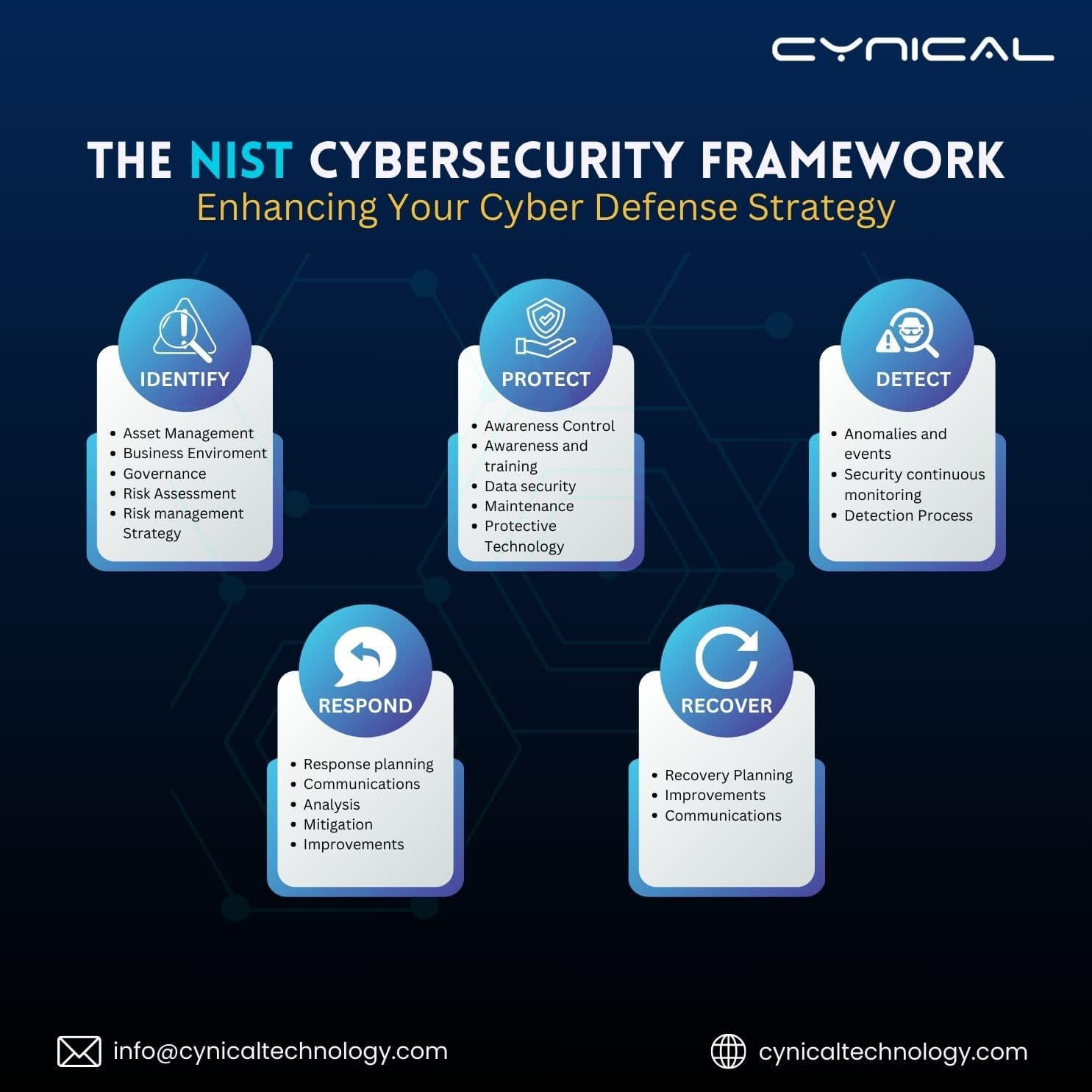
The NIST Cybersecurity Framework: Enhancing Your Cyber Defense Strategy
In today’s rapidly evolving digital landscape, cybersecurity has become more crucial than ever. Businesses of all sizes face increasing threats that could jeopardize their assets, data, and reputation. To effectively manage these risks, organizations need a structured approach that goes beyond traditional security measures. One of the most widely adopted frameworks to achieve this is the NIST Cybersecurity Framework (CSF).
This blog will dive into the NIST Cybersecurity Framework’s core functions: Identify, Protect, Detect, Respond, and Recover. We'll explore how these functions guide organizations in establishing a resilient cybersecurity posture, ensuring they can prevent, mitigate, and recover from cyber incidents effectively.
1. Identify: Understanding and Managing Risks
The first step in the NIST framework involves identifying the critical aspects of your organization that need protection. It focuses on understanding your business environment, assets, and associated cybersecurity risks.
Key components:
- Asset Management: Cataloging all hardware, software, and data assets.
- Business Environment: Understanding the organizational context, mission, and key stakeholders.
- Governance: Establishing policies, procedures, and accountability structures.
- Risk Assessment: Identifying vulnerabilities and evaluating potential impacts.
- Risk Management Strategy: Creating strategies to address identified risks.
By gaining a comprehensive understanding of your organizational assets and risks, you can prioritize resources and establish a baseline for your security efforts.
2. Protect: Implementing Safeguards
Once the risks are identified, the next step is to establish controls and safeguards to protect your systems, data, and resources. The "Protect" function focuses on developing robust defense mechanisms to prevent cyber threats from affecting critical systems.
Key components:
- Access Control: Limiting access to sensitive data based on user roles and permissions.
- Awareness and Training: Educating employees on cybersecurity best practices and policies.
- Data Security: Implementing encryption, backup solutions, and data integrity measures.
- Information Protection Procedures: Establishing guidelines for managing sensitive information.
- Maintenance: Ensuring that systems and applications are updated and patched.
- Protective Technology: Utilizing firewalls, intrusion detection systems, and endpoint protection tools.
Implementing these measures can reduce the likelihood of a successful cyberattack, thereby strengthening your organization’s overall security posture.
3. Detect: Identifying Cybersecurity Events
Even with the best preventive measures, no system is entirely foolproof. That’s why the "Detect" function is critical. It focuses on identifying potential cybersecurity incidents in real time.
Key components:
- Anomalies and Events: Monitoring for deviations from normal operations that may indicate a security issue.
- Security Continuous Monitoring: Using automated tools to monitor systems, networks, and applications.
- Detection Processes: Establishing processes to detect cybersecurity incidents swiftly and accurately.
Continuous monitoring and timely detection can minimize the damage caused by a cyberattack, allowing you to respond more effectively.
4. Respond: Taking Action During a Cyber Incident
When a cybersecurity incident does occur, organizations must have a clear plan for responding. The "Respond" function outlines how to manage and mitigate the effects of an attack.
Key components:
- Response Planning: Creating and maintaining an incident response plan.
- Communications: Coordinating internal and external communications to keep stakeholders informed.
- Analysis: Assessing the impact of the incident and identifying its root cause.
- Mitigation: Taking action to contain and resolve the incident.
- Improvements: Learning from incidents to improve response strategies.
A swift and effective response can significantly reduce the potential impact of a cyberattack, minimizing downtime and reputational damage.
5. Recover: Restoring Normal Operations
The final function, "Recover," focuses on restoring operations and services to normal after an incident. This stage is critical to building resilience and ensuring long-term business continuity.
Key components:
- Recovery Planning: Establishing plans to restore systems, data, and services after an incident.
- Improvements: Analyzing recovery processes to identify areas for improvement.
- Communications: Keeping stakeholders informed about recovery progress and timelines.
By integrating recovery processes into your cybersecurity strategy, you can ensure your organization is better prepared for future incidents, thereby reducing recovery time and minimizing losses.
Why the NIST Framework Matters
The NIST Cybersecurity Framework is a powerful tool for organizations seeking to enhance their cybersecurity maturity. It offers a holistic approach that aligns with your business goals, providing a scalable and adaptable framework for managing cyber risks.
Key Benefits:
- Scalability: Suitable for organizations of all sizes and industries.
- Compliance: Helps organizations meet regulatory and compliance requirements.
- Risk Management: Focuses on identifying and managing risks proactively.
- Continuous Improvement: Encourages ongoing evaluation and enhancement of security measures.
By implementing the NIST Cybersecurity Framework, organizations can strengthen their cybersecurity posture, improve resilience, and protect against evolving threats.
Conclusion: Building a Resilient Cybersecurity Strategy with Cynical Technology
At Cynical Technology, we are committed to helping organizations safeguard their digital assets. By leveraging the NIST Cybersecurity Framework, we provide tailored cybersecurity solutions that align with your unique needs and objectives.
Whether you're looking to enhance your current security measures, perform a risk assessment, or develop an incident response plan, our team of experts can guide you through every step of the process. Let's build a resilient cybersecurity strategy together.
Get in touch with Cynical Technology today to learn how we can protect your business from emerging threats and ensure your systems are secure, resilient, and ready for the future.
Feel free to reach out for more information or to schedule a consultation. Stay secure, stay resilient!